
Mobility Scooter vs Power Wheelchair: Which Is Right for Seniors?
When your independence starts feeling a little less independent, it's time to explore your options. If you've been researching mobility scooter vs wheelchair choices for yourself or a loved one, you're probably discovering that this decision isn't as straightforward as it seems. Both can be life-changing tools that bring back freedom, dignity, and the joy of getting around on your own terms — but they serve different needs and lifestyles.
Maybe you're a daughter watching your dad struggle to keep up at family gatherings. Perhaps you're a retiree who's tired of sitting on the sidelines while your grandkids run through the zoo. Or you might be recovering from surgery and wondering which option will get you back to your morning walks around the neighborhood. Whatever brought you here, let's break this down together so you can make the choice that truly fits your life.
Understanding the Key Differences
At first glance, mobility scooters and power wheelchairs might seem interchangeable — after all, they both have wheels and motors, right? But the similarities pretty much end there. Understanding what makes each one unique is the first step toward finding your perfect match.
Mobility Scooters: Freedom Meets Flexibility
Think of a mobility scooter as your personal vehicle for daily adventures. These devices feature a tiller (similar to bicycle handlebars) for steering, a comfortable captain's seat, and a flat platform for your feet. They're designed for people who can walk short distances but need assistance for longer outings — like spending a full day at Disney World with the grandkids or exploring a farmer's market without worrying about fatigue.
Mobility scooters shine when you're relatively independent but dealing with conditions like arthritis, COPD, heart conditions, or general mobility limitations that make extended walking difficult or exhausting. Most users can transfer on and off the scooter without assistance and have enough upper body strength and coordination to operate the tiller steering.
Power Wheelchairs: Maximum Support and Precision
Power wheelchairs, on the other hand, are built for individuals who need more comprehensive mobility support. They typically use joystick controls (though other options exist for those with limited hand function) and offer a tighter turning radius, making them ideal for navigating indoor spaces. The seating systems can often be customized with additional support features like headrests, lateral supports, and specialized cushioning.
These chairs are often the better choice for people with conditions like multiple sclerosis, muscular dystrophy, severe arthritis, or spinal cord injuries — situations where upper body strength or coordination may be limited, and the user needs to spend most or all of their day seated.
Who Should Choose a Mobility Scooter?
A mobility scooter might be your ideal companion if you check most of these boxes:
- You can walk short distances but tire easily or experience pain during extended walking
- You have good upper body strength and can grip and turn handlebars comfortably
- You can transfer independently (or with minimal assistance) to and from a seated position
- Your home has adequate space for maneuvering, or you primarily need outdoor mobility
- You want to maintain an active lifestyle — shopping trips, social outings, travel adventures
- Portability matters to you — you want something that can go in a car trunk for road trips
Here's a real-world example: Meet Carol, a 72-year-old grandmother from Arizona. She developed severe arthritis in her knees but still has plenty of energy and a sharp mind. Her biggest frustration? Missing out on trips to the botanical gardens with her daughter and having to cut shopping excursions short. A mobility scooter gave Carol her weekends back. Now she's the one leading the pack through Sedona's tourist areas, and she recently took her scooter on a cruise to Alaska.
Who Should Choose a Power Wheelchair?
A power wheelchair may be the better fit if:
- You have limited or no ability to walk and need full-time seated mobility
- Upper body strength or coordination is compromised, making tiller steering difficult
- You need specialized seating support like tilt functions, recline, or custom positioning
- Most of your mobility needs are indoors in smaller spaces requiring tight turns
- Medical conditions require specific positioning throughout the day
- A healthcare provider has recommended power wheelchair features for your condition
Power wheelchairs are often partially or fully covered by Medicare and private insurance when deemed medically necessary, which can be a significant factor in your decision. However, they typically require a prescription and evaluation by a healthcare provider.
Comparing Portability and Lifestyle Factors
Let's talk about something that doesn't always make it into the medical brochures: your actual daily life. Because the "best" mobility device on paper means nothing if it doesn't fit how you really live.
Travel and Transportation
If you're dreaming of road trips to national parks, visiting grandchildren across the state, or simply being able to toss your mobility device in the car for errands — this is where many mobility scooters have a significant advantage.
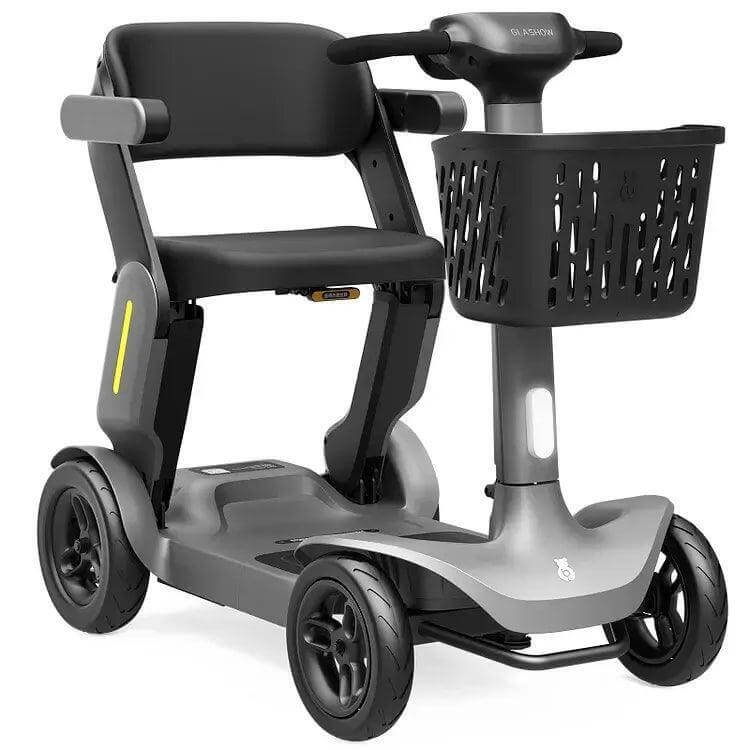
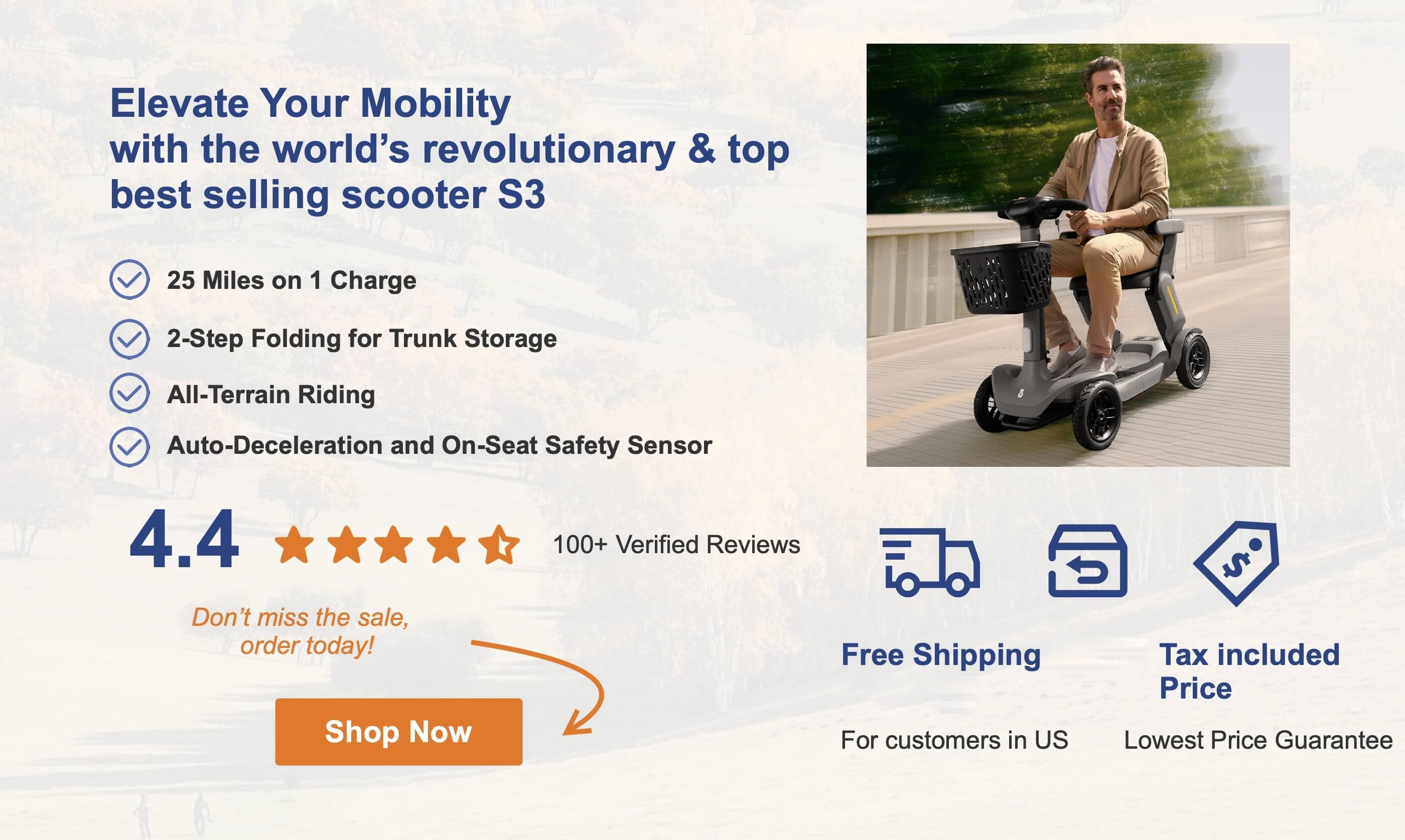
Modern travel scooters are designed with exactly this lifestyle in mind. Take the Glashow S3, for example. At just 70.48 pounds with its foldable design, it can easily fit in most car trunks. With a 25-mile range per charge, you can explore Yellowstone's visitor centers, cruise through outlet malls, or spend a full day at your grandson's soccer tournament without range anxiety.
Power wheelchairs, while excellent for daily use, are typically heavier and may require vehicle modifications or specialized lifts for transportation. This isn't a dealbreaker — many families make it work beautifully — but it's worth considering if spontaneous travel is important to you.
Indoor vs. Outdoor Use
Power wheelchairs generally offer tighter turning radiuses, making them easier to navigate through narrow hallways, small bathrooms, and cramped spaces. If your home has tight corners or you spend most of your time indoors, this maneuverability can be a daily quality-of-life improvement.
Mobility scooters need a bit more room to operate but excel in outdoor environments and larger indoor spaces like shopping malls, grocery stores, and airports. Many users find they're perfectly comfortable using their scooter both indoors and out, especially in homes with reasonable doorway widths.
Glashow Mobility Scooter Comparison: S1 vs S3
If you're leaning toward a mobility scooter, here's a side-by-side look at two popular options that represent different approaches to portable mobility:
| Feature | Glashow S1 | Glashow S3 |
|---|---|---|
| Price | $899 | $1,299 |
| Weight | 96.9 lbs | 70.48 lbs |
| Battery Type | Lead-Acid | Lithium |
| Design | Detachable (breaks down into pieces) | Foldable (folds like a suitcase) |
| Range | Standard range for daily use | Up to 25 miles per charge |
| Best For | Budget-conscious buyers, primarily local use | Frequent travelers, active lifestyles |
| Warranty | 5-year frame warranty | 5-year frame warranty |
The Glashow S1 is an excellent entry point for seniors who want reliable mobility without a premium price tag. It breaks down into manageable pieces, making it easier for caregivers or family members to load into a vehicle.
The Glashow S3 is built for the active senior who refuses to slow down. Its lightweight lithium battery not only extends your range but also shaves off significant weight — something your back (or your spouse's back) will thank you for every time you load it in the car.
Making the Right Choice for Your Situation
Here's the honest truth: there's no universally "better" option between mobility scooters and power wheelchairs. The right choice depends entirely on your individual circumstances, and it's worth taking time to really think through your daily life.
Ask yourself these questions:
- What does a typical week look like for me, and where do I struggle most?
- What activities have I given up that I'd love to reclaim?
- How important is being able to transport my mobility device easily?
- What are my physical capabilities and limitations honestly?
- What does my living space look like, and what are the measurements?
If possible, try before you buy. Many medical supply stores offer demonstrations, and some mobility scooter companies — including Glashow — offer money-back guarantees so you can test the device in your actual life, not just a showroom.
Frequently Asked Questions
Can I use a mobility scooter if I've never driven before?
Absolutely! Mobility scooters are much simpler than cars. The controls are intuitive — typically just a thumb or finger lever for speed and a tiller for steering. Most people feel comfortable within a few minutes of practice. Start in an open area like a parking lot or your backyard, and work up to more complex environments as your confidence grows.
Does Medicare cover mobility scooters or power wheelchairs?
Medicare Part B may cover power wheelchairs (and sometimes scooters) if they're deemed medically necessary and prescribed by a doctor. However, the approval process can be lengthy, and coverage often comes with restrictions. Many people choose to purchase mobility scooters out-of-pocket for faster access and greater choice in models. Options like Klarna financing can make this more affordable with 0% APR payment plans.
How do I transport a mobility scooter in my car?
This depends on the scooter's design. Foldable scooters like the Glashow S3 collapse quickly and can fit in most car trunks — no modifications needed. Detachable scooters like the Glashow S1 break down into lighter pieces that can be lifted individually. For heavier models, vehicle lifts are available. Always check the weight specifications against what you (or your travel companion) can comfortably lift.
What's the difference between a travel scooter and a full-size scooter?
Travel scooters prioritize portability — they're lighter, more compact, and designed to be transported frequently. Full-size scooters offer more features, larger seats, longer ranges, and better suspension but are heavier and harder to transport. Many seniors start with a travel scooter and find it meets all their needs beautifully.
How long do mobility scooter batteries last?
This depends on battery type and usage. Lead-acid batteries typically last 12-18 months with regular use, while lithium batteries can last 3-5 years and offer better range. Lithium batteries also charge faster and don't have the "memory effect" issues that can reduce lead-acid battery life. The Glashow S3's lithium battery provides up to 25 miles per charge — enough for a full day of adventure.
Your Independence Is Waiting
Whether you choose a mobility scooter or a power wheelchair, you're taking an important step toward reclaiming your independence. The goal isn't just getting from point A to point B — it's getting back to living the life you love. Family barbecues, morning coffee runs, walks through the park, vacations you thought were behind you — these moments are too precious to miss.
If a mobility scooter sounds like the right fit for your lifestyle, we invite you to explore the Glashow S1 and S3. Both models come with a 5-year frame warranty, free shipping anywhere in the US, and a 30-day money-back guarantee so you can try it in your real life — not just read about it online.
And because we know that investing in your mobility is a big decision, we offer Klarna financing with 0% APR, letting you break your purchase into manageable payments without any extra cost. Your independence shouldn't have to wait for the "right time" — with flexible financing, the right time can be right now.
Have questions? We're real people who love helping folks find their perfect mobility solution. Reach out anytime — we're here to help you get moving again.