
Can You Use a Mobility Scooter on a Bus or Subway?
If you're thinking about getting around town with your mobility scooter, you've probably wondered about mobility scooter public transportation rules. Good news — the answer is generally yes! Most public transit systems across the United States welcome mobility scooters, but there are some important guidelines and practical considerations you'll want to know about before rolling up to your local bus stop or subway station.
Let's dive into everything you need to know about taking your mobility scooter on buses, subways, and other forms of public transit. Whether you're commuting to work, heading to a doctor's appointment, or just exploring your city, this guide will help you travel with confidence.
Understanding Your Rights Under the ADA
Here's something that might put your mind at ease: the Americans with Disabilities Act (ADA) requires public transit systems to accommodate mobility devices, including scooters. This federal law has been protecting the rights of mobility device users since 1990, and it means that buses, subways, light rail systems, and other forms of public transportation must be accessible to you.
Under the ADA, transit authorities cannot refuse to let you board simply because you use a mobility scooter. However — and this is important — there are some practical limitations. Your scooter needs to fit within the designated wheelchair and mobility device spaces on the vehicle. Most transit systems have size and weight requirements that your scooter must meet.
Typically, these requirements include:
- Maximum length of 48 inches when occupied
- Maximum width of 30 inches
- Maximum combined weight (scooter plus rider) of 600-800 pounds, depending on the system
- Ability to maintain a fixed position during travel
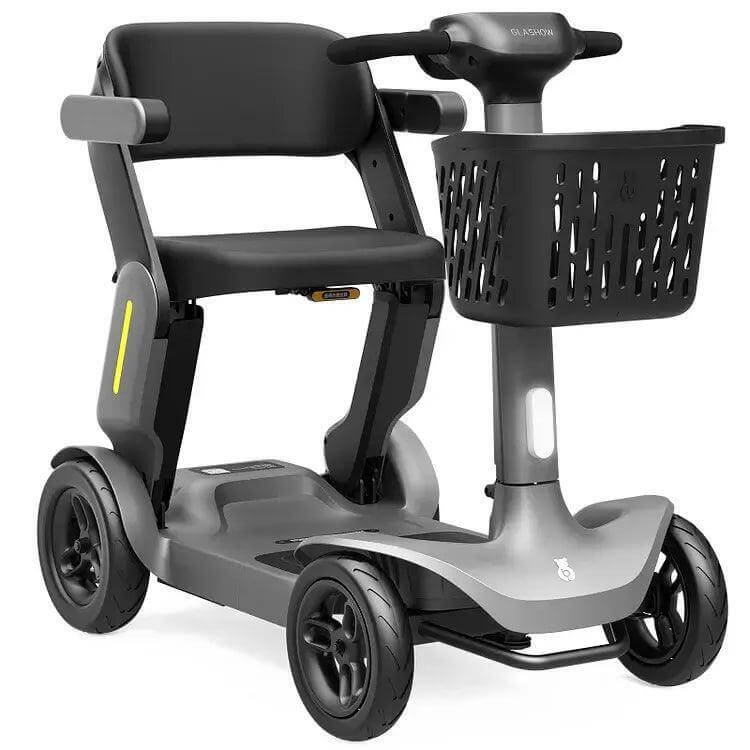
The good news is that most modern mobility scooters, especially travel-friendly models like the Glashow S3, are designed with these requirements in mind. At just 70.48 pounds and with a compact foldable design, the S3 fits comfortably within standard transit guidelines.
Bus Travel Tips for Mobility Scooter Users
Taking the bus with your mobility scooter is usually pretty straightforward, but a little preparation goes a long way. Here's what you can expect and how to make your trip as smooth as possible.
Before you board: Position yourself at the bus stop where the driver can easily see you. Most buses have a designated boarding area at the front where the ramp or lift deploys. When the bus arrives, make eye contact with the driver and wait for them to lower the ramp.
Getting on board: Drive your scooter slowly and carefully up the ramp. Take your time — there's no rush, and the driver is trained to wait for you. Once inside, head to the designated mobility device area, which is usually near the front of the bus.
During the ride: Most transit systems ask that you face forward or backward (not sideways) and engage your scooter's brakes or put it in freewheel mode. Some systems may ask you to transfer to a regular seat if you're able, but this isn't always required.
Exiting the bus: Let the driver know your stop in advance so they can prepare the ramp. Wait until the bus has completely stopped before releasing your brakes and driving down the ramp.
One thing that makes bus travel easier is having a lightweight, maneuverable scooter. The Glashow S1 is a fantastic choice for bus commuters — its detachable design means you can easily separate the components if needed, and its intuitive controls make navigating tight spaces a breeze.
Navigating Subway and Metro Systems
Subway and metro travel can be a bit more challenging than bus travel, mainly because of station accessibility. While most major cities have been working hard to make their subway systems more accessible, not every station has elevators or level boarding platforms.
Check accessibility before you go: Most transit authorities have accessibility maps on their websites showing which stations have elevators, ramps, and other accommodations. Apps like Google Maps also indicate whether a station is wheelchair accessible, which applies to mobility scooters too.
Dealing with elevators: In older subway systems, you'll likely need to use elevators to get from street level to the platform. Always have a backup plan in case an elevator is out of service — unfortunately, this happens more often than we'd like.
Platform gaps: Some subway platforms have gaps between the platform edge and the train door. Modern stations often have bridge plates or level boarding, but in older stations, you may need assistance from transit staff. Don't hesitate to ask — that's what they're there for!
Inside the train: Once aboard, position yourself in the designated area, usually near the doors. Hold onto your scooter's handles and engage the brakes. Subway cars can stop suddenly, so keeping your center of gravity low is important.
Choosing the Right Mobility Scooter for Public Transit
Not all mobility scooters are created equal when it comes to public transportation. If you plan to use transit regularly, you'll want a scooter that's compact, lightweight, and easy to maneuver in tight spaces. Here's how our two most popular models compare:
| Feature | Glashow S1 | Glashow S3 |
|---|---|---|
| Price | $899 | $1,299 |
| Weight | 96.9 lbs | 70.48 lbs |
| Battery Type | Lead-Acid | Lithium |
| Design | Detachable | Foldable |
| Range | Up to 15 miles | Up to 25 miles |
| Best For | Budget-conscious commuters | Frequent transit users who need maximum portability |
| Frame Warranty | 5 Years | 5 Years |
For regular public transit use, the Glashow S3 is our top recommendation. Its foldable design means you can quickly collapse it if needed, and at just over 70 pounds, it's one of the lightest full-featured scooters on the market. Plus, that 25-mile range means you won't have to worry about running out of juice during your daily commute.
That said, the Glashow S1 is an excellent budget-friendly alternative. Its detachable design breaks down into manageable pieces, which can be helpful if you ever need to store it in a compact space or carry individual components.
Frequently Asked Questions About Mobility Scooters and Public Transit
Do I need a permit or special pass to bring my mobility scooter on public transportation?
In most cases, no special permit is required. The ADA protects your right to use public transportation with a mobility device. However, some transit systems offer optional registration programs that can speed up boarding or provide other benefits. Check with your local transit authority to see if they have such a program and whether it might be helpful for you.
What if my mobility scooter doesn't fit in the designated space on the bus?
If your scooter exceeds the size or weight limits for a particular transit vehicle, the operator may not be able to accommodate you on that specific trip. This is why choosing a transit-friendly scooter size is so important. Both Glashow models are designed to meet standard transit requirements, so you shouldn't have this problem with our scooters.
Can the bus driver refuse to let me board with my mobility scooter?
Under the ADA, drivers cannot refuse boarding simply because you use a mobility scooter, as long as your device meets the system's size and weight requirements. If the designated mobility space is already occupied, the driver should ask other passengers to move to make room. If you believe you've been unfairly denied boarding, you have the right to file a complaint with the transit authority.
Is it safe to stay seated on my scooter during bus or subway travel?
Yes, most transit systems allow and even prefer that you remain seated on your mobility scooter during travel. Make sure to engage your brakes and hold onto the handlebars. On buses, drivers may secure your scooter with straps or docking systems. If you're able to transfer to a regular seat, that's also an option, but it's typically not required.
What should I do if a subway elevator is out of service?
Unfortunately, elevator outages happen. Before traveling, check your transit authority's website or app for real-time elevator status updates. Have a backup route planned using accessible stations. If you're stranded, ask station staff for assistance — they may be able to arrange alternative transportation or help you reach a nearby accessible station.
Ready to Explore Your City with Confidence?
Getting around on public transportation with a mobility scooter is absolutely doable — and it opens up a whole world of independence. With the right scooter and a little preparation, you can commute, run errands, visit friends, and explore your city just like everyone else.
At Glashow, we're proud to offer mobility scooters that are designed with real-world use in mind, including public transit. Both our S1 and S3 models come with a 5-year frame warranty, free shipping anywhere in the United States, and a 30-day money-back guarantee so you can try your scooter risk-free.
Wondering how to make it work with your budget? We offer Klarna financing with 0% APR, so you can get moving now and pay over time without any extra cost. Because everyone deserves the freedom to get where they need to go.
Take the first step toward greater independence today. Check out the Glashow S3 for ultimate portability, or explore the Glashow S1 if you're looking for exceptional value. Your next adventure is waiting!