
Can You Take a Mobility Scooter on an Airplane?
There's nothing quite like the excitement of planning a trip — maybe it's finally visiting your grandkids in California, taking that dream vacation to Disney World, or exploring the stunning trails at a national park you've had on your bucket list for years. But if you rely on a mobility scooter, you might be wondering: can you take a mobility scooter on an airplane?
The good news is yes, you absolutely can! Airlines are required by federal law to accommodate mobility devices, and thousands of travelers fly with their scooters every single day. However, there are some important rules, restrictions, and tips you'll want to know before you book that ticket. In this guide, we'll walk you through everything you need to know about flying with your mobility scooter — from TSA regulations to battery requirements and which scooters are the most travel-friendly.
Understanding Airline Regulations for Mobility Scooters
First things first: airlines in the United States are governed by the Air Carrier Access Act (ACAA), which prohibits discrimination against passengers with disabilities. This means airlines must allow you to bring your mobility scooter, and they cannot charge you extra for it. Your scooter is considered an assistive device, not regular luggage.
That said, every airline has specific procedures and requirements you'll need to follow. Here's what you can generally expect:
Notify the Airline in Advance
While it's not always legally required, it's strongly recommended that you call your airline at least 48 hours before your flight to let them know you'll be traveling with a mobility scooter. This gives them time to prepare and ensures a smoother experience at the airport. When you call, be ready to provide:
- The type of scooter (foldable, detachable, etc.)
- The weight and dimensions of your scooter
- The type of battery (lead-acid or lithium-ion)
- Whether the battery is removable
Gate Check vs. Cargo Hold
Most mobility scooters are transported in the cargo hold of the aircraft. Depending on the size of your scooter and the aircraft, you may be able to gate-check it — meaning you can use it right up until you board the plane, and it will be waiting for you when you land. Smaller, foldable scooters are much more likely to qualify for gate-checking, which is one reason why travel-friendly designs have become so popular.
Battery Requirements: The Most Important Factor

Here's where things get a little technical, but don't worry — we'll keep it simple. The battery type in your mobility scooter is the single most important factor when it comes to air travel. Airlines have strict rules about batteries because of safety concerns, and understanding these rules can save you a lot of headaches.
Lithium-Ion Batteries
Lithium-ion batteries are the preferred choice for air travel. They're lighter, more efficient, and most airlines accept them without issue — as long as they meet certain criteria. According to FAA regulations, lithium-ion batteries must be:
- Under 300 watt-hours (Wh) for most airlines
- Removable from the scooter
- Carried in the cabin (not checked in cargo) if removed
- Protected from short circuits
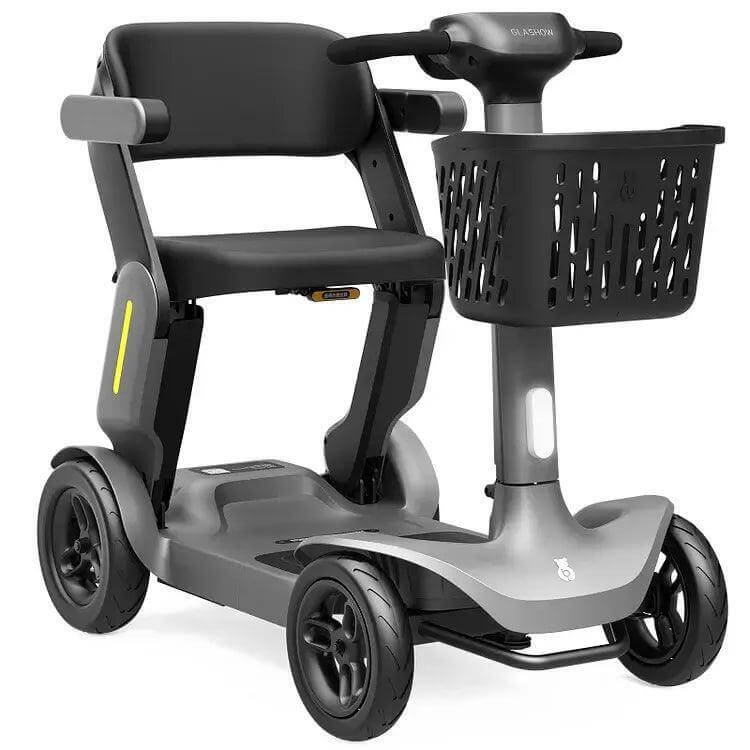
The Glashow S3, for example, features a removable lithium-ion battery that falls well within airline limits, making it an excellent choice for frequent travelers. Its lightweight design (just 70.48 lbs) and foldable frame mean you can navigate airports with ease and gate-check it on most flights.
Lead-Acid Batteries
Lead-acid batteries, also known as sealed lead-acid (SLA) or gel-cell batteries, are also permitted on aircraft. However, they come with more restrictions. These batteries are heavier and must be handled carefully to prevent spills or damage. Airlines typically require:
- The battery to be non-spillable (most modern scooters use sealed batteries)
- Proper packaging if the battery is removed
- Documentation proving the battery is non-spillable
The Glashow S1 uses a reliable lead-acid battery system and features a detachable design that makes it easier to transport. While slightly heavier than lithium alternatives, it's a budget-friendly option that still meets airline requirements.
Comparing Travel-Friendly Mobility Scooters: Glashow S1 vs. S3
Choosing the right scooter for air travel comes down to balancing your needs, budget, and how often you plan to fly. Here's a side-by-side comparison of two excellent options:
| Feature | Glashow S1 | Glashow S3 |
|---|---|---|
| Price | $899 | $1,299 |
| Weight | 96.9 lbs | 70.48 lbs |
| Battery Type | Lead-Acid | Lithium-Ion |
| Design | Detachable | Foldable |
| Range | Up to 15 miles | Up to 25 miles |
| Best For | Occasional travel, budget-conscious buyers | Frequent flyers, maximum portability |
| Warranty | 5-year frame warranty | 5-year frame warranty |
Both scooters come with Glashow's industry-leading 5-year frame warranty, free shipping anywhere in the US, and a 30-day money-back guarantee. If you travel frequently or prioritize lightweight portability, the S3's foldable design and lithium battery make it the clear winner. If you're looking for a reliable scooter at a lower price point and don't fly as often, the S1 is an excellent choice.
Tips for a Smooth Airport Experience
Now that you understand the rules, let's talk about practical tips to make your travel day as stress-free as possible.
Arrive Early
Give yourself plenty of extra time at the airport — at least 2.5 to 3 hours before a domestic flight. Checking in your scooter, going through security, and getting to your gate all take longer when you're traveling with a mobility device.
Bring Documentation
Carry a copy of your scooter's specifications, including battery information and weight. Having this paperwork handy can speed up the check-in process and prevent any confusion with airline staff.
Protect Your Scooter
Unfortunately, mobility devices can sometimes get damaged during transit. Consider using a protective cover or bag, and always remove any detachable parts (like baskets or mirrors) to prevent breakage. Take photos of your scooter before handing it over, just in case you need to file a damage claim.
Request Wheelchair Assistance
Once your scooter is checked, you'll need a way to get to your gate. Don't hesitate to request wheelchair assistance from the airline — this service is free and available to anyone who needs it.
Know Your Rights
If an airline gives you trouble about bringing your mobility scooter, politely remind them of the Air Carrier Access Act. You can also ask to speak with a Complaints Resolution Official (CRO), who is trained to handle disability-related issues. If problems persist, you can file a complaint with the Department of Transportation.
Frequently Asked Questions About Flying with a Mobility Scooter
Do airlines charge extra for mobility scooters?
No, airlines are prohibited from charging fees for mobility devices under the Air Carrier Access Act. Your scooter is considered an assistive device, not regular checked baggage, so it flies free.
Can I use my mobility scooter inside the airport?
Absolutely! You can use your scooter throughout the airport until you reach the gate. At that point, airline staff will take it to be stored in the cargo hold or gate-checked area.
What happens if my mobility scooter is damaged during the flight?
Airlines are required to return your mobility device in the same condition they received it. If damage occurs, report it immediately to airline staff before leaving the airport. Airlines must repair or replace damaged mobility equipment at no cost to you.
Are there weight or size limits for mobility scooters on planes?
Yes, but they vary by airline and aircraft type. Most airlines can accommodate scooters under 100 lbs without issue. Larger, heavier scooters may require advance arrangements. Always check with your specific airline before traveling.
Which Glashow scooter is better for air travel?
For frequent flyers, the Glashow S3 is the ideal choice. At just 70.48 lbs with a foldable frame and airline-approved lithium battery, it's designed with travel in mind. The S1 is also travel-friendly with its detachable design, making it a great option for occasional travelers on a budget.
Ready to Travel the World? Your Adventure Awaits
Don't let uncertainty about air travel keep you from living your best life. Whether you're dreaming of sandy beaches, family reunions, or exploring new cities, a mobility scooter can go wherever you go — including on an airplane.
At Glashow, we believe everyone deserves the freedom to explore. That's why we've designed our scooters with travel in mind, backed by a 5-year frame warranty and a 30-day money-back guarantee. And with free shipping across the United States, getting your new scooter is as easy as planning your next trip.
Ready to take the first step? Explore the Glashow S1 and S3 today. With Klarna's 0% APR financing available at checkout, you can start your journey now and pay over time — because your next adventure shouldn't have to wait.