
Mobility Scooters for MS Patients: What to Look For
Living with multiple sclerosis means adapting to a body that doesn't always cooperate with your plans. Some days you feel like yourself, ready to tackle errands, visit friends, or enjoy a stroll through the farmers market. Other days, fatigue hits like a wall, and walking across your living room feels like climbing a mountain. If you or someone you love is navigating life with MS, a mobility scooter for multiple sclerosis can be a genuine game-changer — not just for getting around, but for reclaiming the independence and spontaneity that this condition often steals away.
But here's the thing: not all mobility scooters are created equal, and what works perfectly for one person might be completely wrong for another. MS presents unique challenges that require thoughtful consideration when choosing mobility equipment. In this guide, we'll walk through everything you need to know to find a scooter that truly fits your life with MS.
Understanding How MS Affects Mobility Needs
Multiple sclerosis is unpredictable by nature. Unlike some conditions where mobility limitations remain relatively constant, MS can fluctuate dramatically — sometimes within the same day. This variability is something you'll want to keep front and center when shopping for a mobility scooter.
Common MS symptoms that impact mobility include:
- Fatigue: Often described as the most challenging symptom, MS fatigue isn't just being tired. It's a bone-deep exhaustion that can strike without warning and make even simple tasks feel impossible.
- Muscle weakness: Particularly in the legs, but sometimes affecting grip strength and arm function as well.
- Balance problems: The neurological effects of MS can make standing and walking feel unstable, even on good days.
- Heat sensitivity: Many people with MS experience symptom flare-ups when they get overheated, which can happen during physical exertion like walking.
- Spasticity: Muscle stiffness and spasms can make certain seating positions uncomfortable.
What does all this mean for choosing a scooter? You need something that accommodates your worst days while still being practical on your better days. You need reliability you can count on, comfort that doesn't aggravate your symptoms, and ideally, a scooter that's easy enough to manage that you won't exhaust yourself just getting it ready to use.
Key Features MS Patients Should Prioritize
When evaluating mobility scooters with MS in mind, certain features move from "nice to have" to "absolutely essential." Let's break down what matters most.
Weight and Portability
This is huge. A scooter that weighs a ton might work fine if you never need to transport it, but most of us want to take our mobility aids places — to appointments, family gatherings, vacations, you name it. When fatigue is already your constant companion, the last thing you need is to wrestle with a 150-pound piece of equipment.
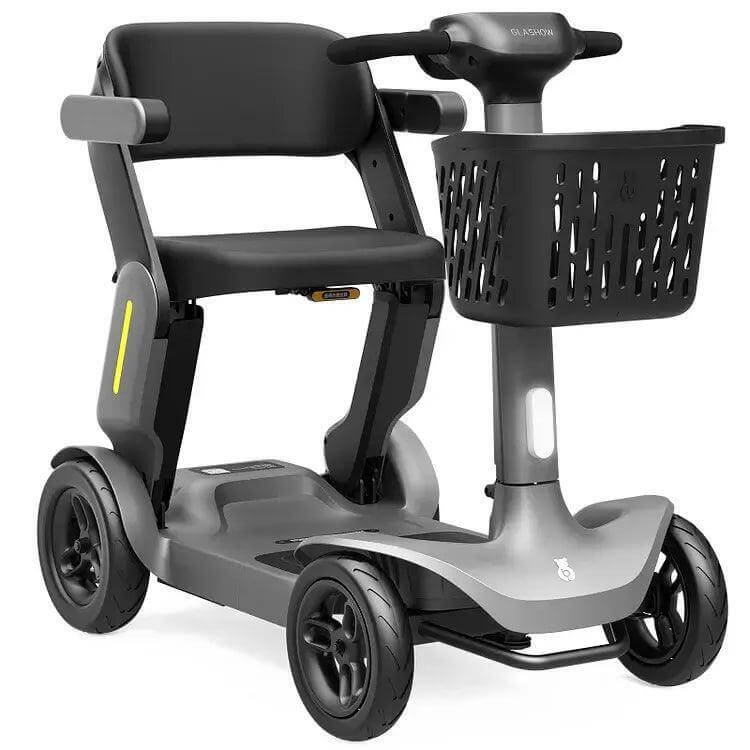
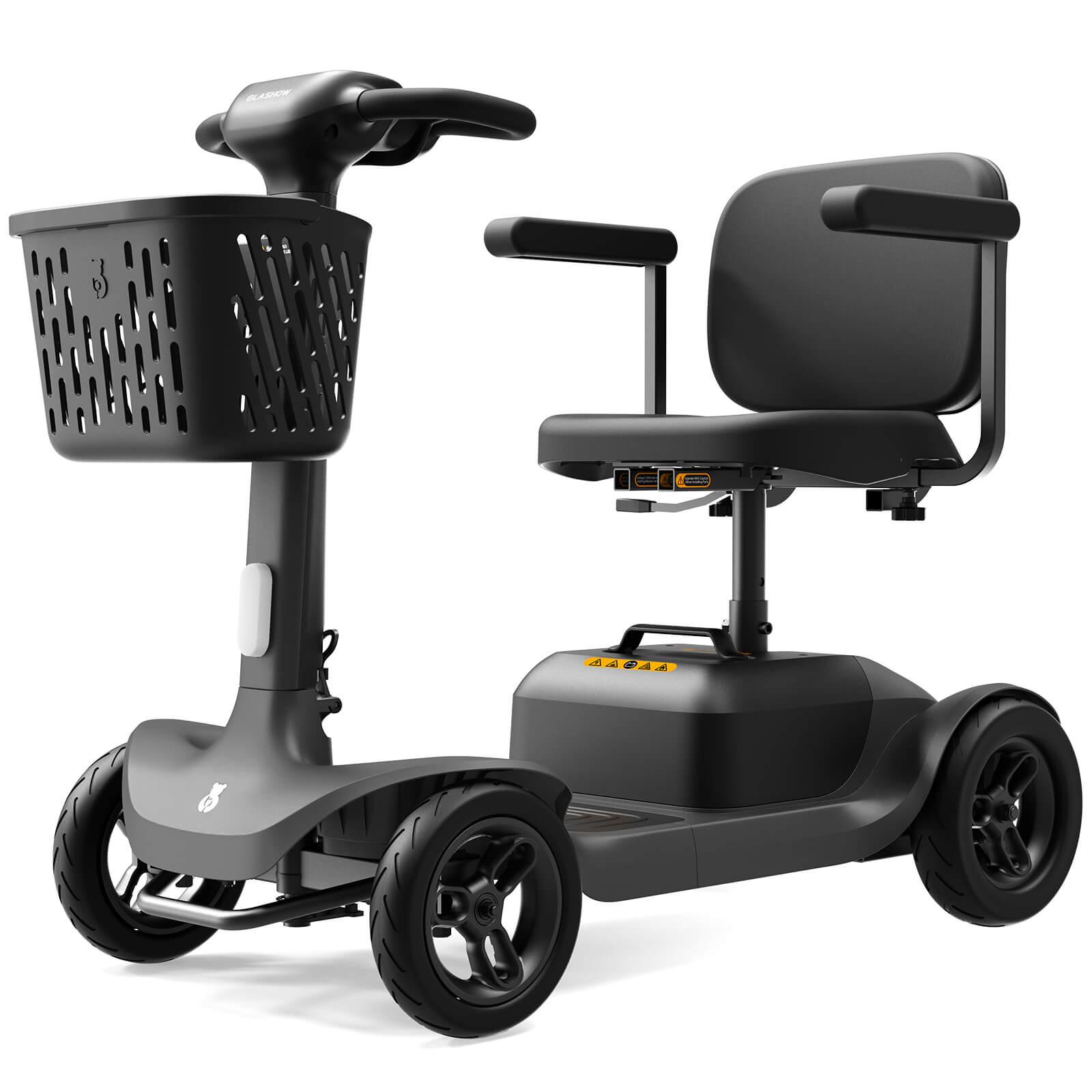
Look for lightweight designs, especially if you'll be loading and unloading the scooter yourself. Foldable models are particularly helpful because they eliminate the need to disassemble multiple pieces. The Glashow S3, for example, weighs just 70.48 pounds and folds with a single motion — a real blessing when your energy is limited.
Battery Range and Reliability
Running out of battery mid-outing isn't just inconvenient; for someone with MS, it can mean being stranded without the ability to walk back. Always look at the realistic range a scooter offers and give yourself plenty of buffer room.
Lithium batteries generally outperform lead-acid batteries in both range and longevity. They're also lighter and charge faster. The S3's lithium battery delivers up to 25 miles on a single charge, which means you can handle a full day of activity without constantly watching your battery indicator.
Comfort and Adjustability
Spending extended time in a scooter seat when you're dealing with spasticity or sensory issues requires a seat that actually supports your body properly. Look for:
- Padded, adjustable seats
- Armrests you can position comfortably
- Adjustable tiller (steering column) to accommodate different arm lengths
- Smooth suspension to minimize jarring on uneven surfaces
Ease of Operation
If your hands aren't always cooperative, you need controls that are intuitive and don't require fine motor precision. Simple throttle controls and easy-to-read displays make a real difference when brain fog or tremors are part of your daily reality.
Comparing Your Options: Glashow S1 vs. S3
To give you a concrete sense of what's available, let's compare two popular options that work well for MS patients:
| Feature | Glashow S1 | Glashow S3 |
|---|---|---|
| Price | $899 | $1,299 |
| Weight | 96.9 lbs | 70.48 lbs |
| Battery Type | Lead-acid | Lithium |
| Range | Up to 15 miles | Up to 25 miles |
| Design | Detachable (breaks into pieces) | Foldable (single unit) |
| Best For | Budget-conscious buyers with help for transport | Independent users who prioritize ease and range |
| Frame Warranty | 5 years | 5 years |
The Glashow S1 is an excellent entry point if you have a caregiver or family member who handles transport, or if you primarily use your scooter close to home. The detachable design means it can fit in smaller vehicles when broken down.
The Glashow S3 is ideal if maintaining independence is your top priority. The lighter weight and one-piece folding design mean you can manage it yourself, and the extended range handles longer outings without worry. For many MS patients, the extra investment pays off in day-to-day quality of life.
Insurance, Medicare, and Making It Affordable
Let's talk money, because quality mobility equipment is an investment. Some Medicare plans cover mobility scooters when prescribed by a doctor as medically necessary, so that's worth exploring with your healthcare provider. Private insurance varies widely, so check your policy details.
Even without insurance coverage, you don't have to pay everything upfront. Glashow offers financing through Klarna at 0% APR, letting you spread payments over time without interest charges. Combined with free shipping anywhere in the US and a 30-day money-back guarantee, you can try a scooter with genuine peace of mind.
Living Well with MS: More Than Just Getting Around
Here's something that doesn't get said enough: using a mobility scooter isn't giving up. It's being smart about energy conservation so you can actually enjoy your life instead of spending it all on the exhausting work of walking.
Many MS patients resist mobility aids because it feels like admitting defeat. But the opposite is true. When you're not draining your energy reserves just getting from point A to point B, you have more left over for the things that actually matter — playing with grandkids, exploring new places, staying active in your community.
A good mobility scooter doesn't limit your world. It expands it.
Frequently Asked Questions
Can I use a mobility scooter if my MS symptoms fluctuate?
Absolutely. In fact, many MS patients find a scooter most valuable precisely because their symptoms are unpredictable. On good days, you might walk more and use the scooter less. On difficult days, it's there when you need it. Think of it as a tool that adapts to you, not something that defines your abilities.
Will Medicare cover a mobility scooter for multiple sclerosis?
Medicare may cover mobility scooters as durable medical equipment if your doctor documents that it's medically necessary for use inside your home. Coverage depends on your specific plan and circumstances, so work with your physician and Medicare representative to understand your options.
How do I transport a mobility scooter if I have limited strength?
Look for lightweight, foldable models that minimize the physical effort required. The Glashow S3 at 70.48 pounds with one-step folding is designed with exactly this challenge in mind. Vehicle lifts are also available if lifting isn't feasible for you.
Is a mobility scooter or power wheelchair better for MS?
It depends on your specific needs. Scooters work well for people who can still walk short distances and transfer independently. They're easier to transport and use outdoors. Power wheelchairs may be better for those with more significant mobility limitations or who need to use the chair full-time indoors.
How long do mobility scooter batteries last before needing replacement?
Lead-acid batteries typically last 12-18 months with regular use. Lithium batteries, like those in the Glashow S3, generally last 3-5 years. Proper charging habits extend battery life regardless of type.
Ready to Reclaim Your Independence?
Choosing a mobility scooter is a personal decision, and there's no single right answer for everyone with MS. What matters is finding equipment that fits your life — your symptoms, your activities, your budget, and your goals.
At Glashow, we build our scooters with real people's needs in mind, backing them with a 5-year frame warranty because we believe in what we make. Whether the S1 or S3 is right for you, we're here to help you move through life on your own terms.
Ready to take the next step? Explore the Glashow S1 or Glashow S3 today. With Klarna's 0% APR financing, free shipping across the US, and our 30-day money-back guarantee, you can find your freedom with zero risk. Because living well with MS shouldn't mean sitting on the sidelines.