
Mobility Scooter Laws by State: Registration and Rules
If you're thinking about getting a mobility scooter to help you get around, you're probably wondering about the legal stuff. Do you need to register it? Can you ride it on the sidewalk? What about in stores? Understanding mobility scooter laws by state is essential before you make your purchase, and honestly, it's not as complicated as you might think. Let me walk you through everything you need to know so you can ride with confidence and peace of mind.
The good news is that mobility scooters are generally treated much more favorably under the law than other motorized vehicles. Unlike cars, motorcycles, or even e-bikes in some states, mobility scooters designed for people with disabilities typically don't require registration, insurance, or a driver's license. But there are some important nuances depending on where you live and where you plan to ride.
Federal Law: The Foundation for Mobility Scooter Rights
Before we dive into state-specific rules, let's talk about federal law because it provides important protections that apply everywhere in the United States. Under the Americans with Disabilities Act (ADA), mobility scooters are classified as "other power-driven mobility devices" (OPDMDs). This classification is a big deal because it means businesses, government buildings, and public spaces generally must allow you to use your mobility scooter inside.
The ADA requires that entities open to the public make reasonable modifications to their policies to permit the use of mobility devices by individuals with disabilities. So when you roll into your local grocery store or mall on your Glashow S1, you're protected by federal law. Businesses can ask you about your device if it's not obvious that you need it for mobility assistance, but they cannot ask about your specific disability.
Additionally, the Fair Housing Act ensures that people who need mobility scooters can use them in their homes and communities, even in places with strict HOA rules. Your housing provider must make reasonable accommodations for your mobility needs.
State-by-State Registration Requirements
Here's where things get interesting. Most states do not require registration for mobility scooters that meet certain criteria, but the specifics vary. Let's break down how different states approach this:
States with No Registration Required
The majority of states, including California, Texas, Florida, New York, and Pennsylvania, do not require mobility scooters to be registered as long as they're designed for and used by individuals with mobility impairments. These devices are typically limited to speeds of 5-8 mph and are meant for pedestrian areas.
States with Speed and Power Limitations
Some states have specific definitions based on speed and motor power. For example:
- California: Mobility scooters (called "motorized wheelchairs" under state law) that travel at speeds not exceeding 8 mph are exempt from vehicle registration requirements.
- Texas: Electric personal assistive mobility devices are not considered motor vehicles and don't require registration or insurance.
- Florida: Mobility scooters used on sidewalks and pedestrian paths don't need to be registered, but they must yield to pedestrians.
- Arizona: Motorized wheelchairs are exempt from motor vehicle laws when used on sidewalks and crosswalks.
- Michigan: Electric personal assistive mobility devices can be used on sidewalks and don't require registration.
States with Specific Restrictions
A few states have additional rules worth noting:
- New York: While registration isn't required, NYC has specific rules about where mobility scooters can operate within the five boroughs.
- Massachusetts: Mobility scooters are treated as pedestrians when operating on sidewalks at appropriate speeds.
- Oregon: Users must follow pedestrian rules and cannot exceed 8 mph on sidewalks.
Where Can You Legally Ride Your Mobility Scooter?
Understanding where you can ride is just as important as knowing whether you need to register. Here's a general guide that applies in most states:
Sidewalks: Almost universally allowed. This is the primary intended use area for mobility scooters. Just remember to be courteous to pedestrians and keep a safe speed.
Crosswalks: Yes, you can use crosswalks just like any pedestrian. Wait for the signal and cross when it's safe.
Bike Lanes: This varies significantly. Some states allow it, others don't. When in doubt, stick to the sidewalk.
Roads: Generally, mobility scooters should not be operated on roads, especially those with speed limits above 25 mph. If there's no sidewalk, some states allow you to travel on the shoulder facing traffic, similar to pedestrians.
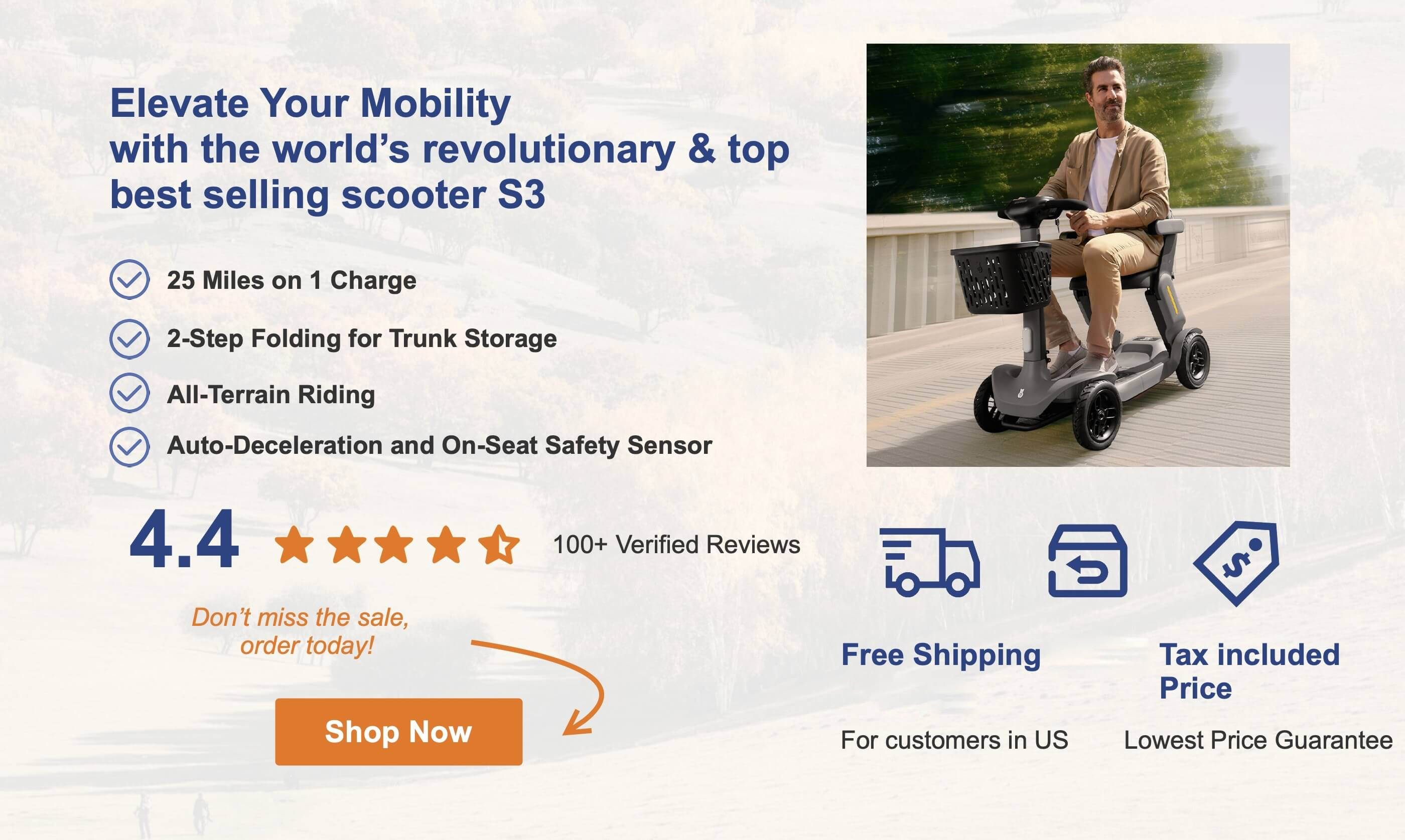
Public Transportation: Under the ADA, public buses and trains must accommodate mobility scooters if they meet size and weight requirements. The Glashow S3 is particularly great for public transit because it folds down compactly and weighs only 70.48 pounds.
Choosing a Scooter That Meets Legal Requirements
When shopping for a mobility scooter, you'll want one that clearly qualifies as a mobility device under both federal and state law. Here's how our Glashow scooters compare:
| Feature | Glashow S1 | Glashow S3 |
|---|---|---|
| Price | $899 | $1,299 |
| Weight | 96.9 lbs | 70.48 lbs |
| Battery Type | Lead-Acid | Lithium |
| Design | Detachable | Foldable |
| Range | Up to 15 miles | Up to 25 miles |
| Frame Warranty | 5 Years | 5 Years |
| Best For | Daily neighborhood use | Travel and longer trips |
Both scooters operate at pedestrian-friendly speeds, making them legally compliant mobility devices in all 50 states. They're designed specifically for individuals who need mobility assistance, which is the key factor in how they're classified under the law.
Tips for Staying Compliant and Safe
Even though the legal requirements are minimal, here are some best practices to keep you on the right side of the law and, more importantly, safe:
- Carry identification: While you don't need a license, having ID is always a good idea.
- Know your local ordinances: Cities and counties sometimes have additional rules. A quick call to your local government office can clarify any questions.
- Use lights and reflectors: If you're out in low-light conditions, make sure you're visible to others.
- Yield to pedestrians: Even though you have the right to use sidewalks, pedestrians on foot have the right of way.
- Follow traffic signals: When crossing streets, obey all traffic signals and use crosswalks.
- Consider insurance: While not required, some homeowner's or renter's policies can cover mobility scooter incidents. It's worth checking.
Frequently Asked Questions
Do I need a driver's license to operate a mobility scooter?
No, you do not need a driver's license to operate a mobility scooter in any U.S. state. Mobility scooters designed for individuals with disabilities are classified differently than motor vehicles, so no license is required. This is true whether you're riding on sidewalks, in stores, or on other pedestrian pathways.
Can I take my mobility scooter on an airplane?
Yes, but there are specific requirements. Airlines must accommodate mobility scooters under the Air Carrier Access Act. However, battery type matters. The Glashow S3's lithium battery and foldable design make it particularly airline-friendly. Always notify your airline in advance and check their specific battery requirements, as lithium batteries have watt-hour limitations for air travel.
Are mobility scooters allowed inside stores and restaurants?
Absolutely. Under the Americans with Disabilities Act, businesses open to the public must allow mobility scooters to be used by individuals with disabilities. They cannot charge you extra or treat you differently because you use a mobility device. If you ever encounter resistance, politely remind them of their ADA obligations.
Do I need insurance for my mobility scooter?
No state requires insurance for mobility scooters. However, it's worth checking whether your homeowner's or renter's insurance policy covers your scooter against theft or damage. Some people also opt for personal liability coverage for added peace of mind, though incidents involving mobility scooters are rare.
Can my HOA or landlord prohibit my mobility scooter?
No. Under the Fair Housing Act, housing providers must make reasonable accommodations for individuals with disabilities, including allowing the use and storage of mobility scooters. If your HOA or landlord gives you trouble, they may be violating federal law. You have the right to use the mobility device you need.
Ready to Regain Your Independence?
Now that you understand the mobility scooter laws by state, you can move forward with confidence. The legal landscape is actually pretty friendly for mobility scooter users, and you'll find that these devices open up a world of independence and freedom.
At Glashow, we're proud to offer mobility scooters that meet all legal requirements while providing the quality and reliability you deserve. Our products have even been featured in USA Today, and we stand behind every scooter with a 5-year frame warranty. Plus, we offer free shipping anywhere in the United States and a 30-day money-back guarantee so you can try your scooter risk-free.
Worried about the upfront cost? Don't be. We've partnered with Klarna to offer 0% APR financing, so you can spread your payments out over time without paying a penny in interest. Getting your mobility back shouldn't mean financial stress.
Whether you choose the budget-friendly Glashow S1 for everyday adventures or the ultra-portable Glashow S3 for travel and longer range, you're investing in your freedom. Take that first step today — we're here to help you every mile of the way.