
Traveling to Europe with a Mobility Scooter: Rules by Country
Dreaming of strolling through the lavender fields of Provence, exploring ancient Roman ruins, or sipping espresso in a charming Italian piazza? If you use a mobility scooter, Europe travel might seem overwhelming at first — but here's the good news: it's absolutely possible, and thousands of Americans do it every year. Understanding the rules for mobility scooter Europe travel is your first step toward an unforgettable adventure across the pond.
Europe has become increasingly accessible over the past decade, with most countries welcoming mobility scooter users with open arms. However, regulations can vary significantly from one nation to another, and being prepared will make your journey smoother and more enjoyable. Whether you're planning a romantic getaway to Paris or a family reunion in Ireland, this comprehensive guide will help you navigate the rules, requirements, and practical tips for traveling with your mobility scooter.
General European Union Accessibility Standards
Before diving into country-specific rules, it's helpful to understand that the European Union has established baseline accessibility standards that member countries follow. The EU's commitment to disability rights means that public transportation, tourist attractions, and accommodations are generally required to provide reasonable accessibility accommodations.
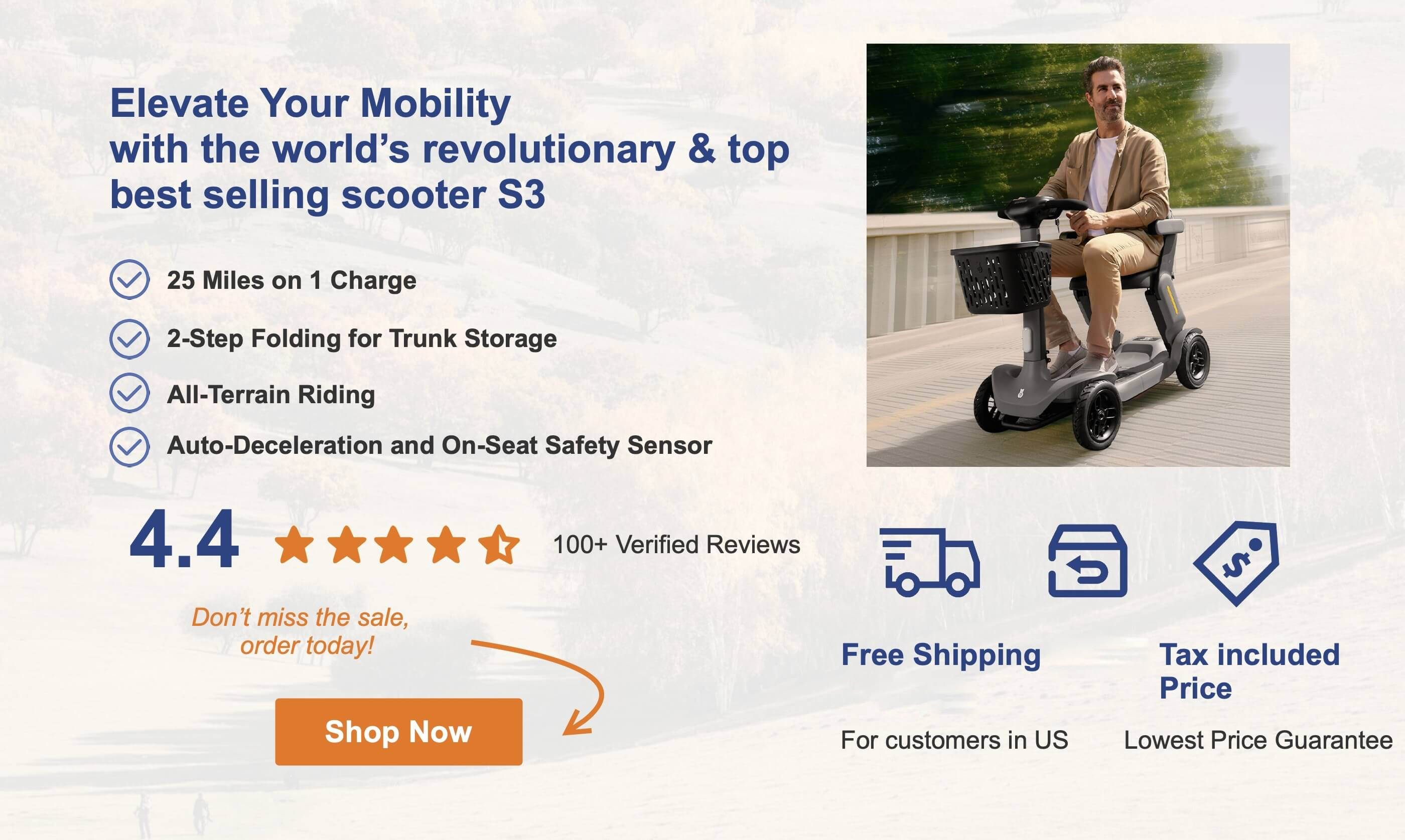
Most EU countries classify mobility scooters as "Class 2" vehicles when they travel under 4 mph (6.4 km/h) and don't require registration. However, faster scooters may face different regulations. The good news is that lightweight, travel-friendly scooters like the Glashow S3 — weighing just 70.48 pounds and easily foldable — fall well within acceptable parameters for most European destinations.
Key EU-wide considerations include:
- Most countries allow mobility scooters on sidewalks and pedestrian areas
- Public transportation systems must accommodate mobility devices
- Tourist attractions receiving public funding must provide accessibility
- Hotels with more than a certain number of rooms must offer accessible options
Country-by-Country Mobility Scooter Regulations
United Kingdom
The UK distinguishes between Class 2 scooters (pavement use, max 4 mph) and Class 3 scooters (road use, max 8 mph). American visitors with typical mobility scooters fall into Class 2, meaning you can freely use sidewalks, parks, and pedestrian areas without registration. London's public transportation, while historic, has made significant accessibility improvements. The Underground now has step-free access at many stations, and buses accommodate mobility devices.
France
France welcomes mobility scooter users warmly. Scooters are classified as pedestrian aids when traveling at walking speeds, allowing access to sidewalks, parks, and most public spaces. Paris has invested heavily in accessibility, with many Metro stations now featuring elevators. Pro tip: France's smaller villages often have cobblestone streets, so a scooter with good suspension — like the Glashow S1 with its comfortable ride quality — makes a real difference.
Germany
German efficiency extends to accessibility rules. Mobility scooters under 6 km/h (3.7 mph) are treated as walking aids and require no special permits. Faster models may need liability insurance. German trains and buses are exceptionally accessible, and most tourist sites accommodate mobility devices without issue.
Italy
Italy presents a mixed experience. Major cities like Rome and Florence have made strides in accessibility, though ancient streets and historic buildings can pose challenges. Mobility scooters are permitted on sidewalks and in pedestrian zones. Venice, with its bridges and water taxis, requires advance planning — contact venues and transportation services ahead of your visit.
Spain
Spain is considered one of Europe's most accessible countries for mobility scooter users. Barcelona and Madrid feature excellent accessible public transportation, wide sidewalks, and well-maintained pedestrian areas. Spanish law protects the rights of mobility device users in public spaces.
Netherlands
The Netherlands' flat terrain makes it ideal for mobility scooter travel. Dutch cities are designed with accessibility in mind, featuring smooth bike paths (which scooters can often share), excellent public transportation, and a culture of accommodation. Amsterdam can be challenging due to narrow streets, but most areas remain accessible.
Portugal
Portugal has invested significantly in accessibility, particularly in Lisbon and Porto. While hilly terrain in some areas presents challenges, many tourist zones are scooter-friendly. Portuguese law permits mobility scooters in pedestrian areas without special requirements.
Airline Requirements for Traveling with Your Mobility Scooter
Getting your mobility scooter to Europe is often easier than you might expect. U.S. law (the Air Carrier Access Act) and European regulations require airlines to accommodate mobility devices as checked luggage at no additional charge. However, there are important requirements to understand:
Battery Regulations: This is where your scooter type matters significantly. Airlines have strict rules about batteries:
- Lithium batteries (like those in the Glashow S3) must be under 300 watt-hours and removable. The S3's lithium battery meets airline requirements and can be carried in the cabin.
- Lead-acid batteries (like those in the Glashow S1) must be properly secured and may need to be disconnected. Airlines handle these regularly but require advance notice.
Advance Notification: Always contact your airline at least 48 hours before departure to arrange mobility scooter accommodation. Provide dimensions, weight, and battery specifications.
Size and Weight: Most airlines can accommodate scooters in the cargo hold, but smaller, foldable models are easier to transport. The Glashow S3's foldable design and 70.48-pound weight make it particularly travel-friendly.
Choosing the Right Scooter for European Travel
Not all mobility scooters are created equal when it comes to international travel. European adventures often involve cobblestone streets, compact spaces, and various transportation modes. Here's how Glashow's models compare for travel purposes:
| Feature | Glashow S1 | Glashow S3 |
|---|---|---|
| Price | $899 | $1,299 |
| Weight | 96.9 lbs | 70.48 lbs |
| Battery Type | Lead-Acid | Lithium |
| Design | Detachable | Foldable |
| Range | Standard | Up to 25 miles |
| Travel Friendliness | Good (detaches for transport) | Excellent (folds compactly) |
| Frame Warranty | 5 Years | 5 Years |
For frequent European travelers, the Glashow S3 offers compelling advantages: its lightweight, foldable design fits easily into taxi trunks and hotel closets, while the 25-mile range means you can explore all day without worrying about charging. The lithium battery also simplifies airline requirements.
However, the Glashow S1 remains an excellent choice for budget-conscious travelers who don't mind a slightly heavier scooter. Its detachable design still allows for practical transport, and the lower price point leaves more money for your European adventures.
Practical Tips for a Smooth European Journey
Beyond understanding regulations, these practical tips will help ensure your mobility scooter Europe travel goes smoothly:
Research Charging Compatibility: European outlets use 220-240 volts with Type C, F, or G plugs (depending on the country). Bring a universal adapter and verify your scooter's charger accepts multiple voltages — most modern chargers, including Glashow's, are compatible.
Book Accessible Accommodations: Contact hotels directly to confirm accessibility features. European "accessible" rooms may differ from American standards, so specific questions about doorway widths and bathroom setups are worthwhile.
Plan Transportation in Advance: Research accessible transportation options before arriving. Many European cities offer accessible taxi services that can be pre-booked.
Carry Documentation: While not always required, carrying documentation of your mobility needs can smooth interactions with airlines, attractions, and transportation services.
Purchase Travel Insurance: Ensure your policy covers mobility equipment damage or loss during travel.
Frequently Asked Questions
Do I need special permits to use a mobility scooter in Europe?
In most European countries, mobility scooters operating at walking speeds (under 4 mph) are classified as pedestrian aids and require no special permits or registration. Faster scooters may need insurance or registration in some countries like Germany. Always check specific country requirements before traveling.
Can I take my mobility scooter on European trains?
Yes, European trains are generally required to accommodate mobility scooters. Most high-speed trains (like France's TGV or Germany's ICE) have designated wheelchair/scooter spaces. Booking assistance in advance is recommended, especially for cross-border journeys. Contact the railway company 24-48 hours before travel.
What happens if my mobility scooter is damaged during the flight?
Airlines are liable for damage to mobility devices during transport under both U.S. and EU regulations. Document your scooter's condition before check-in with photos, and report any damage immediately upon arrival. This is another reason Glashow's 5-year frame warranty provides valuable peace of mind.
Are European cruise ports accessible for mobility scooters?
Most major European cruise ports have improved accessibility significantly. However, some Mediterranean ports require tender boats to reach shore, which can be challenging for scooter users. Research your specific cruise itinerary and contact the cruise line about accessibility at each port of call.
How do I charge my mobility scooter in European hotels?
You'll need a plug adapter appropriate for your destination country (Type C for most of continental Europe, Type G for the UK). Most modern scooter chargers, including those for Glashow models, automatically handle voltage differences between American (120V) and European (220-240V) electrical systems.
Ready for Your European Adventure?
Traveling to Europe with a mobility scooter opens up a world of incredible experiences — from the art museums of Paris to the coastal villages of Portugal. With proper planning and the right equipment, nothing should stop you from creating unforgettable memories.
If you're considering a new mobility scooter for your European travels, Glashow offers both the budget-friendly S1 and the travel-optimized S3 with features designed for adventurers like you. Both models come with our industry-leading 5-year frame warranty, free shipping anywhere in the United States, and a 30-day money-back guarantee so you can try before you commit.
Worried about the investment? We've partnered with Klarna to offer 0% APR financing, making it easier than ever to get the mobility freedom you deserve. Visit Glashow.com today to explore your options and start planning that European adventure you've been dreaming about. Your journey awaits!