
How Mobility Scooters Help Cancer Patients Maintain Independence
A cancer diagnosis changes everything — including the simple act of getting from point A to point B. Whether you're navigating treatment side effects, recovering from surgery, or managing the everyday exhaustion that comes with fighting this disease, maintaining your independence matters more than ever. That's exactly where a mobility scooter can make a profound difference for cancer patients dealing with fatigue and reduced stamina.
You've already got enough on your plate. The last thing you need is to feel like you're losing control over your daily life. Walking to the mailbox shouldn't feel like climbing a mountain, and a trip to the grocery store shouldn't wipe you out for the entire day. A reliable mobility scooter gives you back the freedom to move through your world on your own terms — and that kind of independence is priceless during recovery.
Understanding Cancer-Related Fatigue and Mobility Challenges
If you've experienced cancer-related fatigue, you know it's nothing like ordinary tiredness. It's a bone-deep exhaustion that doesn't go away with rest. According to the American Cancer Society, between 80-100% of cancer patients experience fatigue during treatment, and for many, it persists long after treatment ends.
This fatigue affects more than just your energy levels. It impacts your balance, your muscle strength, and your confidence in getting around safely. Many cancer patients find themselves limiting activities, skipping social events, or relying heavily on family members for help with basic tasks. Over time, this reduced activity can lead to muscle weakness, making the fatigue cycle even harder to break.
Chemotherapy, radiation, surgery, and immunotherapy all take their toll on the body. Anemia, neuropathy, and general weakness are common side effects that make walking any distance a genuine challenge. Some treatments affect your peripheral nerves, leading to numbness or tingling in your feet that makes walking feel unsafe. Others leave you short of breath after just a few steps.
Here's the thing — pushing through extreme fatigue isn't noble. It's actually counterproductive to your recovery. Your body needs energy to heal, and spending it all on basic mobility leaves nothing in the tank for the important work of getting better.
Why a Mobility Scooter Makes Sense During Cancer Treatment
A mobility scooter isn't a sign of giving up. It's a smart tool that helps you conserve energy for what really matters — spending time with loved ones, attending appointments, and simply enjoying life despite your diagnosis. Think of it as redistributing your energy budget in a way that actually makes sense.
Preserve Your Energy for Healing
When you're not exhausting yourself just getting around the house or running basic errands, you have more energy available for recovery. Many cancer patients report that using a mobility scooter actually helps them stay more active overall because they're not completely wiped out after simple tasks.
Maintain Your Social Connections
Isolation is a real risk during cancer treatment. When you're too tired to attend family gatherings, visit friends, or even go out for a cup of coffee, loneliness can compound an already difficult situation. A mobility scooter makes it possible to keep showing up for the moments that matter.
Attend Appointments Without Exhaustion
Cancer treatment means a lot of medical appointments — often at large hospitals with long hallways and distant parking lots. Arriving at your oncologist's office already exhausted from the walk in isn't ideal. A portable mobility scooter can travel with you and make those hospital visits much more manageable.
Stay Safe and Prevent Falls
Fatigue and weakness increase your fall risk significantly. A fall during cancer treatment can lead to serious complications, delayed treatment, or hospitalization. Using a mobility scooter in situations where you feel unsteady is simply good risk management.
Choosing the Right Mobility Scooter for Cancer Recovery
Not every mobility scooter is right for every situation. Cancer patients have specific needs — portability for frequent appointments, easy operation when you're not feeling your best, and reliability you can count on during an already stressful time.
At Glashow, we've designed our scooters with real people and real situations in mind. Here's how our two models compare for cancer patients:
| Feature | Glashow S1 | Glashow S3 |
|---|---|---|
| Price | $899 | $1,299 |
| Weight | 96.9 lbs | 70.48 lbs |
| Battery Type | Lead-Acid | Lithium |
| Design | Detachable | Foldable |
| Range | Up to 15 miles | Up to 25 miles |
| Best For | Budget-friendly reliability | Maximum portability & range |
| Warranty | 5-Year Frame | 5-Year Frame |
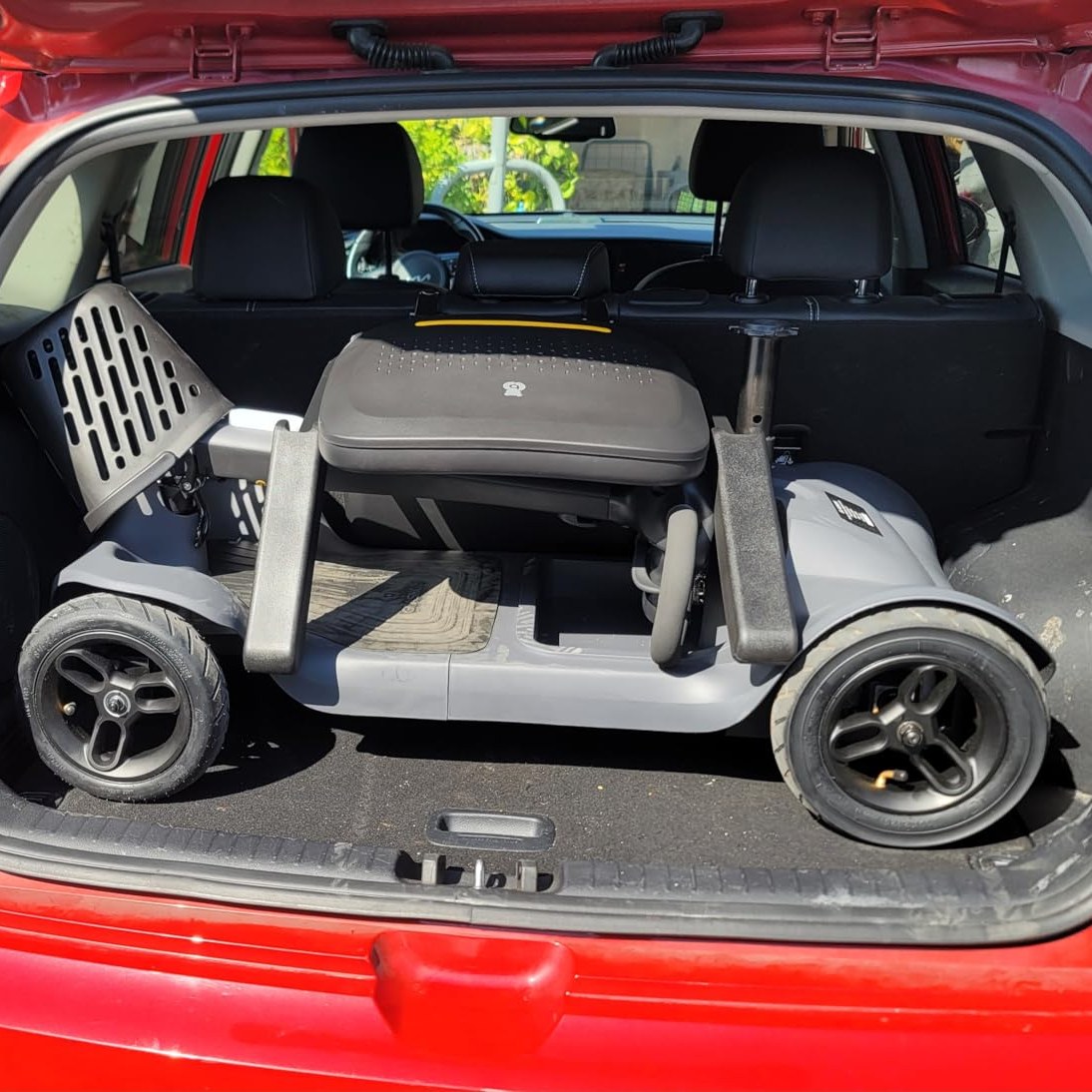
For cancer patients who need to transport their scooter to frequent appointments, the Glashow S3 is often the better choice. At just 70.48 pounds with its one-step folding design, it's manageable even when your strength isn't at its peak. The lithium battery is lighter and charges faster, and the 25-mile range means you won't need to worry about running out of power during long days at the hospital.
If you're primarily using your scooter at home and in familiar environments, the Glashow S1 offers excellent value at $899. Its detachable design breaks down into manageable pieces for transport, and the lead-acid battery provides reliable performance for everyday use.
Real Independence During an Uncertain Time
Cancer takes so much from you — your health, your energy, sometimes your hair, often your sense of control. But it doesn't have to take your independence. A mobility scooter is one way to push back, to say that you're still going to live your life on your terms even when your body isn't cooperating.
We hear from customers all the time who tell us their Glashow scooter changed their cancer journey. They could attend their grandchild's soccer game. They could browse the farmers' market without needing to sit down every five minutes. They could meet friends for lunch without spending the next two days in bed recovering from the effort.
These might sound like small things, but when you're fighting cancer, they're everything. They're the moments that remind you who you are beyond your diagnosis.
Both Glashow models come with our 5-year frame warranty because we believe in building products that last. We offer free shipping across the United States, and our 30-day money-back guarantee means you can try your scooter in your real life, during your real treatment, and make sure it's the right fit.
Frequently Asked Questions
Can I use a mobility scooter during chemotherapy treatment?
Absolutely. Many cancer patients find a mobility scooter especially helpful during chemotherapy when fatigue and weakness are most severe. There are no medical restrictions on using a mobility scooter during treatment. In fact, oncologists often encourage patients to use mobility aids that help them conserve energy and stay safe.
Will insurance cover a mobility scooter for cancer patients?
Coverage varies depending on your insurance plan. Medicare may cover mobility scooters if your doctor documents medical necessity. We recommend checking with your insurance provider and asking your oncologist for documentation. Even if insurance doesn't cover it, Glashow offers Klarna financing with 0% APR to make your purchase more manageable.
Is a mobility scooter safe to use if I have neuropathy from chemotherapy?
Yes, and it may actually be safer than walking if you have peripheral neuropathy. Neuropathy can cause numbness, tingling, and balance problems that increase your fall risk. A mobility scooter keeps you stable and secure while still allowing you to get around independently. The Glashow S1 and S3 both feature intuitive controls that are easy to operate even with reduced hand sensation.
How do I transport a mobility scooter to cancer treatment appointments?
The Glashow S3's foldable design makes it particularly easy to transport. It folds in one simple step and fits in most car trunks. At 70.48 pounds, it's manageable for caregivers to lift, and many patients can handle it themselves on better days. The S1 breaks down into lighter pieces if that approach works better for your situation.
Will I need a mobility scooter forever after cancer treatment?
Not necessarily. Many cancer patients use mobility scooters temporarily during their most difficult treatment phases and gradually transition back to walking as they recover their strength. Others find they appreciate the convenience and energy savings enough to continue using their scooter even after recovery. Our 30-day money-back guarantee lets you try it without long-term commitment.
Take the Next Step Toward Independence
You're already doing the hard work of fighting cancer. You deserve every tool that makes this journey a little easier. A Glashow mobility scooter won't cure your fatigue, but it will give you back the freedom to keep living your life while you heal.
Ready to explore your options? Visit our S3 page for maximum portability or check out the budget-friendly S1 for reliable everyday use. With Klarna's 0% APR financing available, you can spread your payments over time and get the support you need right now. Plus, with free shipping and our 30-day money-back guarantee, there's no risk in giving it a try.
Your independence matters. Let's help you keep it.