
Obesity and Mobility Scooters: Heavy-Duty Options for Bariatric Users
Finding the right mobility solution when you're carrying extra weight can feel overwhelming. You want something that's going to support you safely, last for years, and honestly, not make you feel self-conscious every time you use it. If you've been searching for a heavy duty mobility scooter bariatric obese users can depend on, you've come to the right place. We're going to walk through everything you need to know about choosing a scooter that truly fits your needs — because everyone deserves the freedom to move through life comfortably.
Here's the thing: standard mobility scooters often max out at 250-300 pounds, which simply doesn't work for a significant portion of Americans who need mobility assistance. According to the CDC, over 42% of American adults are classified as obese, and many face mobility challenges that could be addressed with the right equipment. The good news? There are excellent heavy-duty options designed specifically with larger users in mind.
Understanding Weight Capacity: Why It Matters More Than You Think
When we talk about weight capacity for mobility scooters, we're not just throwing numbers around. This specification directly affects your safety, the scooter's performance, and how long your investment will last. Operating a scooter at or near its maximum weight limit puts extra strain on the motor, frame, and battery — which means reduced range, slower speeds, and a shorter overall lifespan.
For bariatric users, I always recommend choosing a scooter with a weight capacity at least 50-75 pounds above your current weight. This gives you a comfortable buffer and ensures the scooter performs optimally. Think of it like buying shoes — you wouldn't want ones that barely fit, right? You want a little room to breathe.
Heavy-duty scooters typically offer weight capacities ranging from 350 to 500+ pounds. These models feature reinforced frames, wider seats, more powerful motors, and larger batteries to accommodate the additional demands of supporting more weight while still delivering smooth, reliable performance.
Key Features to Look for in a Bariatric Mobility Scooter
Shopping for a heavy-duty mobility scooter isn't quite the same as shopping for a standard model. There are specific features you'll want to prioritize to ensure comfort, safety, and long-term satisfaction.
Frame Construction and Durability
The frame is literally the backbone of your scooter. Look for models with reinforced steel or aluminum frames that are specifically engineered for higher weight capacities. A quality manufacturer will back their frame with a solid warranty — like Glashow's 5-year frame warranty, which speaks volumes about the confidence they have in their construction.
Seat Width and Comfort
Standard scooter seats typically measure 16-18 inches wide, which can feel cramped for larger users. Bariatric-friendly scooters offer seats ranging from 20-24 inches wide, with extra padding and ergonomic design to support longer rides. Pay attention to armrest spacing too — you want to feel comfortable, not squeezed in.
Motor Power and Torque
A more powerful motor isn't just about speed — it's about having enough torque to handle inclines, rough terrain, and the additional work required to move more weight efficiently. Look for motors in the 400-watt range or higher for bariatric applications.
Battery Life and Range
Heavier loads drain batteries faster — that's just physics. This makes battery capacity and type incredibly important for bariatric users. Lithium batteries generally offer better performance and longer range compared to traditional lead-acid batteries, especially under heavier loads.
Stability and Safety Features
A wider wheelbase and lower center of gravity help prevent tipping, which is essential for heavier users. Anti-tip wheels, responsive braking systems, and sturdy tiller controls all contribute to a safer riding experience.
Comparing Your Options: Glashow S1 vs. S3
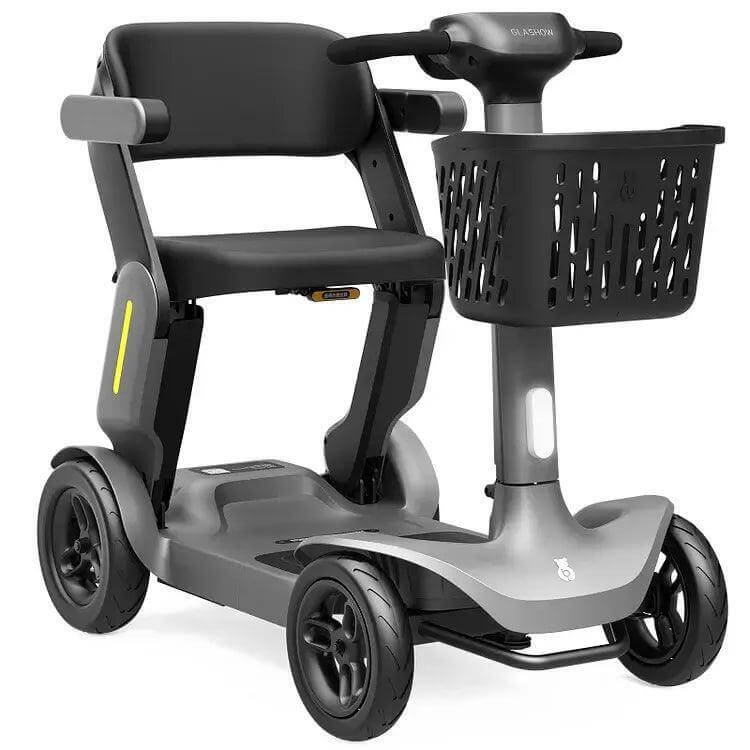
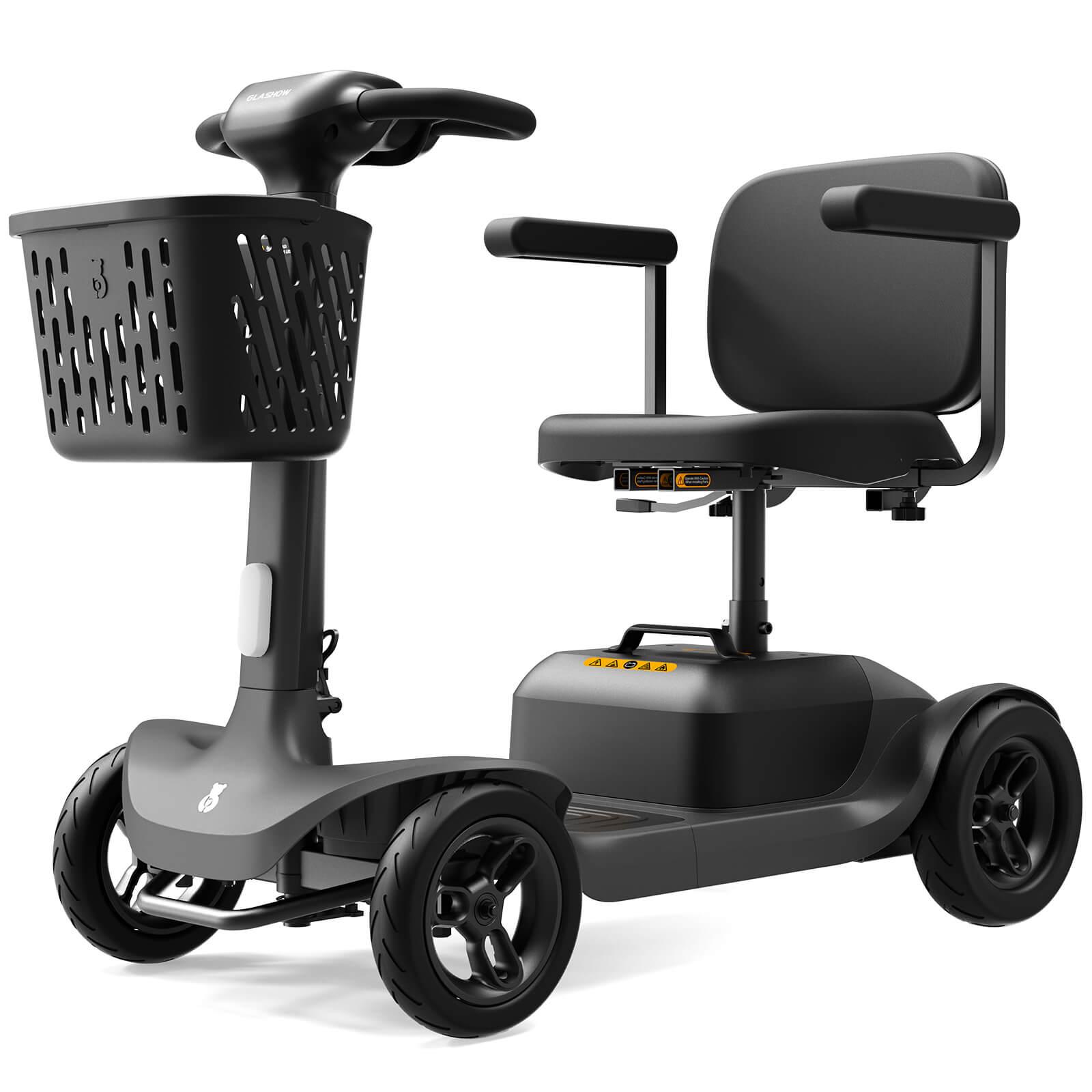
Let's take a closer look at two excellent options from Glashow, a premium American mobility scooter brand that's been featured in USA Today. Both models offer quality construction and thoughtful design, but they serve slightly different needs.
| Feature | Glashow S1 | Glashow S3 |
|---|---|---|
| Price | $899 | $1,299 |
| Weight | 96.9 lbs | 70.48 lbs |
| Battery Type | Lead-Acid | Lithium |
| Design | Detachable | Foldable |
| Range | Standard | Up to 25 miles |
| Frame Warranty | 5 Years | 5 Years |
| Best For | Budget-conscious buyers, home use | Active users, travel, maximum range |
The Glashow S1 offers an incredible entry point at $899, featuring a detachable design that makes it easy to transport in pieces. The lead-acid battery keeps costs down while still providing reliable performance for daily use around the neighborhood or shopping center.
For those who need maximum range and portability, the Glashow S3 is a game-changer. At just 70.48 pounds with its lithium battery, it's significantly lighter than many heavy-duty options. The foldable design means you can toss it in your trunk without breaking it down into pieces, and that 25-mile range means you can run errands all day without worrying about running out of juice.
Lifestyle Considerations for Bariatric Scooter Users
Choosing the right scooter goes beyond just specs and weight limits. Think about how you'll actually use your scooter day-to-day.
Will you be traveling frequently? If you're planning to take your scooter on road trips, to appointments across town, or on flights, weight and portability become crucial factors. The Glashow S3's foldable design and lighter weight make it ideal for users who refuse to let mobility challenges keep them homebound.
What's your daily terrain like? If you're navigating smooth mall floors and level sidewalks, almost any quality scooter will work well. But if you're dealing with gravel driveways, grass, or hills, you'll want that extra motor power and stability that heavy-duty models provide.
How far do you typically need to go? Be honest with yourself about your daily range needs. It's always better to have more battery capacity than you think you need — there's nothing worse than running low on power when you're still a mile from home.
Frequently Asked Questions
What is the maximum weight capacity I should look for in a bariatric mobility scooter?
For bariatric users, look for scooters with weight capacities of 350 pounds or higher. Ideally, choose a model rated for at least 50-75 pounds more than your current weight to ensure optimal performance and longevity. This buffer helps the motor, battery, and frame operate without strain, giving you better range and a longer-lasting scooter.
Are lithium batteries worth the extra cost for heavier users?
Absolutely. Lithium batteries offer several advantages that are particularly beneficial for bariatric users: they're lighter (reducing overall scooter weight), they maintain consistent power output throughout the discharge cycle, they charge faster, and they typically last 2-3 times longer than lead-acid batteries. The upfront investment pays off in performance and replacement costs over time.
Can I use a mobility scooter if I weigh over 400 pounds?
Yes, there are mobility scooters designed for users weighing 400+ pounds. When shopping in this category, prioritize reinforced frames, extra-wide seats, powerful motors (500+ watts), and look for manufacturers who specifically engineer their products for bariatric use. Always verify the exact weight capacity before purchasing and consider consulting with a mobility specialist.
How do I transport a heavy-duty mobility scooter?
Transportation options include vehicle lifts, ramps, or choosing a scooter with a foldable or detachable design. The Glashow S3, for example, folds compactly and weighs only 70.48 pounds, making it manageable for trunk storage without special equipment. For heavier models, a vehicle lift attached to your car's hitch can be a worthwhile investment.
Does Medicare or insurance cover bariatric mobility scooters?
Medicare Part B may cover mobility scooters if deemed medically necessary and prescribed by your doctor. However, coverage often comes with restrictions and may not cover the specific model you want. Many users find that financing options like Klarna's 0% APR make purchasing the right scooter more accessible, even without insurance coverage.
Taking the Next Step Toward Freedom
Living with obesity presents enough daily challenges — getting around shouldn't be one of them. The right heavy-duty mobility scooter can genuinely transform your independence, allowing you to shop, visit friends, attend events, and simply enjoy being out in the world on your own terms.
Both the Glashow S1 and Glashow S3 are backed by a 5-year frame warranty, free shipping anywhere in the US, and a 30-day money-back guarantee — so you can try your scooter with complete peace of mind. And if budget is a concern, Glashow offers Klarna financing with 0% APR, making it easier to get the mobility solution you deserve today without financial stress.
You've spent enough time sitting on the sidelines. It's time to get moving again — comfortably, safely, and with confidence. Explore your options and find the heavy-duty scooter that's going to carry you through life's next adventures.